Don't forget: you can click on an image to enlarge it!

Wednesday, 15 March 2017

Dartford Warblers, Hen Harrier and a couple of year ticks!

Brian and I left the Yare Valley just after seven and were on Dunwich Heath by eight. The morning was warm and still, so unsurprisingly there were Dartfords everywhere: Brian will demur, but I reckon we saw fifteen or more! As always, they weren't easy to photograph, but we managed a few images. Biggest surprise was a ringtail Hen Harrier: we saw it only fleetingly and very distantly, but a nice bird nonetheless.

A move to Minsmere was pretty fruitless, until a short diversion to the Rhododendron Tunnel added Siskin and a very bright Redpoll to the list. The stroll back to the car gave us close-ups of a Muntjac.

Last stop was Dunwich Beach: a longish walk produced incredibly distant views of at least one Great White Egret, as well as several Stonechats and a well-marked Pipit: I thought Tree Pipit?


Tuesday, 14 March 2017

Kingfisher, Water Rail and Bearded Tits: Strumpshaw surprise!

As usual, I met Brian T at Strumpshaw, who joined Brian S and me in Fen Hide for an unpleasantly chilly couple of hours. A few other regulars joined us and there was plenty of badinage and craik. This didn't prevent us enjoying views of some decent birds, although the two Water Rails were almost subliminal!

In view of my recent experiences I decided not to tough it out, retreating with Brian S at around ten and leaving Brian T to carry on with his 'vol ranger' duties.


Monday, 13 March 2017

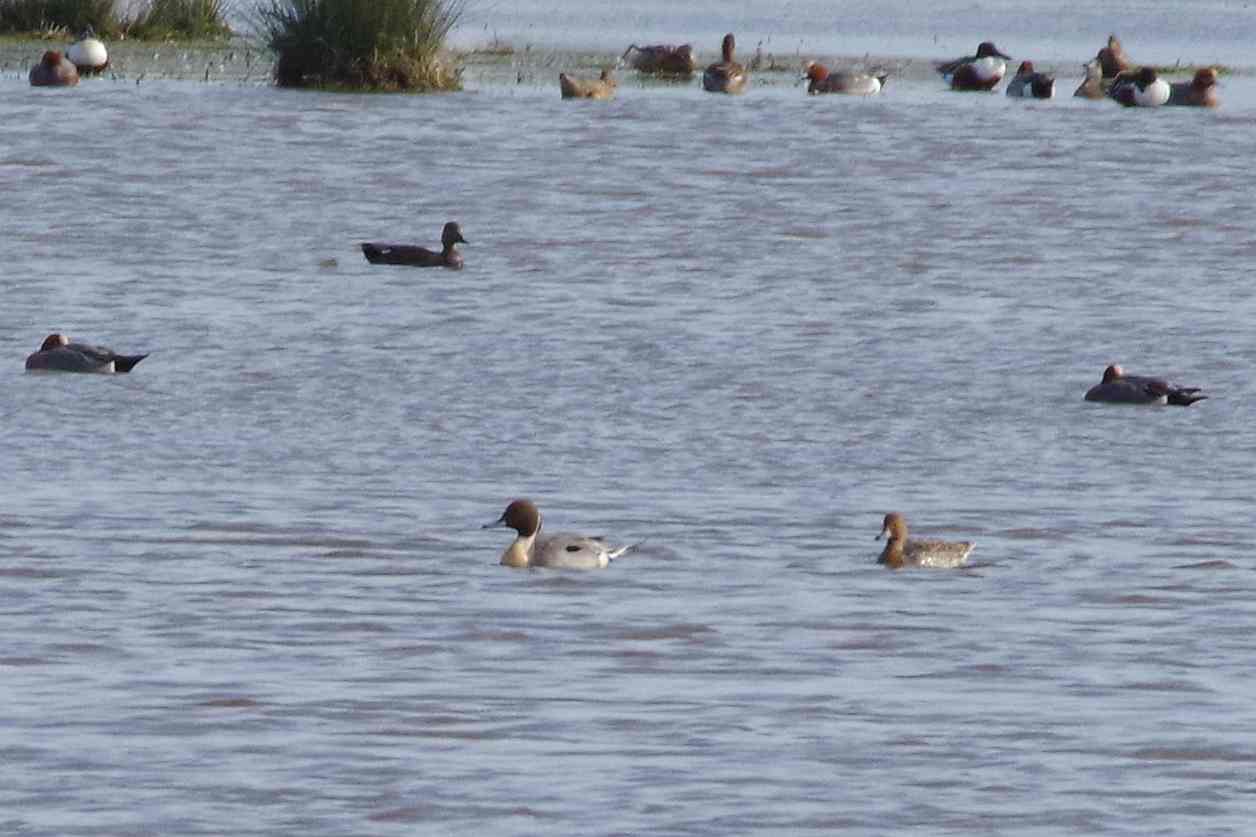
Pintail at Buckenham: very unusual birds in the Yare Valley

After my daily trip to the Post Office, I thought a stroll in the sunshine might be fun, so I carried on to Buckenham Marshes, parked in the RSPB car park and walked round to the old wind pump.

Along the track to the river Skylarks, Linnets and a pair of Grey Wagtails were good to see, as were a couple of Buzzards displaying over the woods. The pools to the right of the track held a few Avocet and Ruff, but (despite a good search) no sign of any Garganey yet. Still hundreds of Wigeon, however, as well as Shoveler, Teal and Shelduck.

Lots more waders were feeding in the flooded fields North of the River Yare, including Dunlin, Redshank, Oystercatchers, Lapwing, Golden Plover and Ruff: Reed Buntings and Cetti's Warblers were calling from virtually every bush.

From the old mill, large flocks of duck could be seen out on the water meadows and on the flash towards Cantley: it was here I located two pairs of Pintail. I've only seen a Pintail in the Mid-Yare Valley on one previous occasion, so these were outstanding patch birds.The resident Barnacles looked splendid in the sunshine: there are now more of these breeding in the UK than Egyptian Geese...

Walking back to the car, I checked the usual tree and, as expected, a Peregrine was dozing among the branches.


Sunday, 12 March 2017

Eating us out of house and home!

As if the Peacocks weren't bad enough, all the pheasants have now learnt how to access the suet!
 

Massive garden tick: no really! Massive!

These two Peacocks dropped into our little garden this morning: amusing and beautiful to see at first, but they quickly grew bored with the seed and started eating the bulbs, buds and flowers!
 
I've scared them away three times but they keep coming back!


Saturday, 11 March 2017

St Andrew's Hall, Norwich

A first for Linda and me: a chance to sell our meteorites that didn't involve a long drive and an early start!

Today we set up at the beautiful St Andrew's Hall in Norwich: it was an antique and collectors fair, so we didn't expect to sell much if anything. In the event, it was quite a successful day, with lots of new contacts, a few pounds in the kitty and home by 5!

Friday, 10 March 2017

Dichotomy...

I don't personally  'tweet' - I do have a mobile phone, but use it just for emergencies - but I must confess that I am a daily reader of the Surfbirds Norfolk twitter posts. This is a fabulous resource for Norfolk birders, since one can discover within seconds if something new has turned up, or if a long-stayer is still around.

The majority of posters can be divided into two groups:

* Older birders/photographers who have the time - and, often, resources, to spend two or three days in the field. I am probably in this category, in the 'it's good exercise and provides social interaction now I'm retired' subset.

*
Younger, often newly-graduated birders, whose tweets are filled with absorbing accounts of multi-species twitches around the UK and far-flung destinations.


I find it quite interesting to read the thumbnail autobiographies that appear at the top of each page. In the case of subset two, these frequently include some form of statement about protecting the environment and a personal commitment to combat global warming, climate change, carbon dioxide emission and so on.

To me, there's a dichotomy here: how does jetting around the world or driving thousands of miles annually within the UK address these noble aims? Just for fun, have a look at your region's tweets: I bet most of the posters have seen the Dusky and Blue Rock Thrushes, the Eastern Stonechat, the Pacific and  White-billed Divers and most of the other recent 'good' birds.

Let me quickly add that I might well have added myself to the crowds at these twitches 20 years ago: I personally think anything that gets people out in the countryside and away from TVs and games consoles is a good thing. But let's not pretend we're saving the planet by doing it!

I attach a photo of a nice little bird that didn't add to my carbon footprint!

Thursday, 9 March 2017

Spring is Sprung!

Lots to do at home today, getting ready for a show at the weekend: nevertheless, the sunny weather brought some interesting things into the garden.

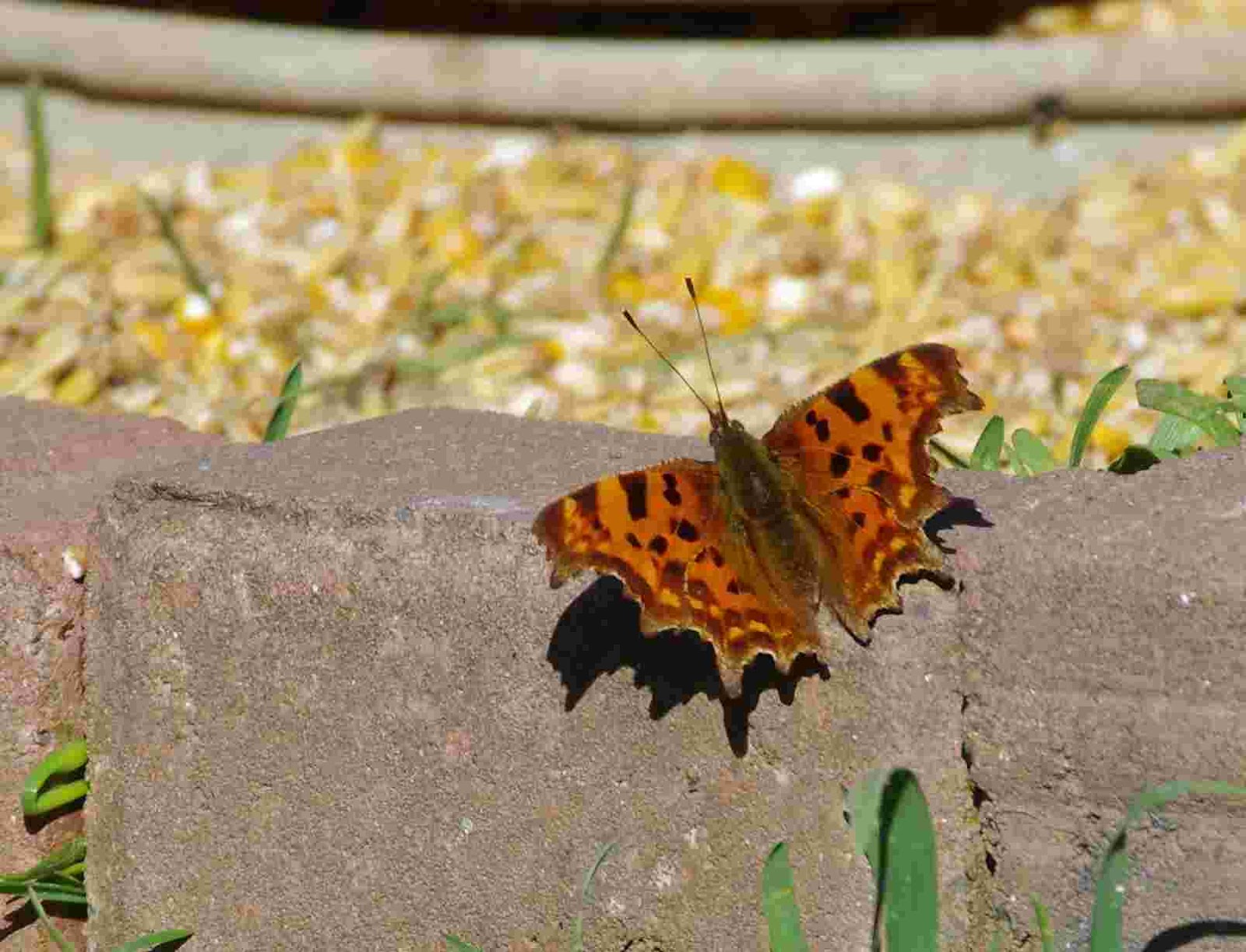
We've already had visits from Brimstone and Small Tortoiseshell: today a mint-fresh Comma spent half an hour sunbathing on the pheasant feeder. Overhead a pair of Buzzards displayed and called most of the afternoon, while two Starlings came for a drink at dusk.